Cascadian Nomads
  • Pet Adventure Blog
  • Cascadia- About Our Area
  • Nomads- About Us
    • Cascadian Nomads Advertising Opportunities
  • Humans
  • Canines
  • Psittacines
  • Felines
  • Contact

Positive Reinforcement Training For Five Worthy Pets In Six Simple Steps | #MultiPetMania

6/1/2015

13 Comments

 
Positive Reinforcement Training For Five Pets In Six Steps | #MultiPetMania: Adventure cat Amelia and Triton Cockatoo Leo (in stroller) with dogs rough collie Huxley, Cardigan Welsh corgi Brychwyn and miniature dachshund Wilhelm.
Typist: Bethany
It never fails. Every time the pets and I are out and about, someone asks me how I manage three dogs, a cat and a cockatoo. At a neighborhood street fair on Friday, a woman came near to say hello to the pets and queried "I could never take my pets out like this. How do you do it?" Ensuring the dogs were focused on their greeting a stranger skills and that Leo and Amelia felt safe, I replied "Well, it takes a lot of training." The woman seemed stunned, "You train all of them?" If only she knew how many times (and in how many locations) I have had this same conversation. Sadly, a busy street fair is not the place to explain my passion for and all the benefits of positive reinforcement pet training. Later, I wondered if I could have done better to inspire her to train her pets than my
quick "yes, of course" answer. Maybe it wasn't so much that I felt gypped in not being able to thoroughly address my sadness in imagining that this woman's pets never get to experience the joys of training and socialization but my disappointment was in that she asked the wrong question. What I would have responded had she asked, "How do you train all of them?"

1. Individual Time
Training time is individual time and separate time for each pet is one of the most important part of life in a multiple pet family. In parrot training, time set aside just for the bird is called "focused attention." Leo is particularly fond of time when I focus on him and only him. Actually, in Leo's perfect world, he would have all eyes on him all the time. But all of the pets love some time in a room, in the yard or in a class when it is just me and them. In fact, every living creature ever loves on-on-one time with someone they love. Training is a perfect way to make special separate time happen on a regular basis.
Positive Reinforcement Training For Five Pets In Six Steps | #MultiPetMania: Training triton cockatoo Leo with his ball while rough collie dog Huxley watches calmly from his bed.
2. Taking Turns
As important as focused attention is, anyone who has ever known a dog or other pet with separation anxiety knows how detrimental too much together time can be. When training one pet, the others are behind a closed door or gate or at home. So it isn't just the pet getting the one-on-one time with me that is learning. The pets who are waiting their turn to be trained are being taught patience and independence. Changing the pack/flock/family dynamic briefly is excellent for the pet's relationships with each other as well.
3. Get Organized
I finally started a training journal! Now I will be able to keep track of what each dog has been working on as well as steps in cat and cockatoo training. Not only do the pets each need individual time but they are also individuals. They don't all like to learn the same things nor do they all have perfect training sessions each and every day. My training journal is going to be my guide to where each pet has been in their training and what we should work on next.
Positive Reinforcement Training For Five Pets In Six Steps | #MultiPetMania: Rough collie dog Huxley, cardigan welsh corgi dog Brychwyn and miniature dachshund dog Wilhelm pose with the pets new training journal
Our new training journal has "Fearless" scrolled across the cover in gold.
4. Handle With Care
Obviously positive reinforcement training is about taking exceptional care of a pets physical, mental and emotional well being. But don't forget that the trainer needs just as much positivity as the trainee. I am taking care of myself every time I take my pets out for a walk.
I am taking care of myself when taking pride in seeing any of my pets succeed. I don't see training time as a chore but I that hasn't always been true. There are plenty of ways out of feeling negative about training time and when the positivity is kept in training, for trainer and trainee, everyone wins.
5. Ask The Pros
The best way out of a training rut is to seek professional help. This can be as complex and pricey as attending positive reinforcement training workshops or classes or as simple and free-from-the-library as checking out a new training book or DVD. There are dozens of pet sports to try and new pet activities pop up constantly. Enlisting the help of a professional positive reinforcement trainer can also help you with managing multiple pet training time.
6. Tick Tock
Time spent training means less time spent doing other multiple pet managing. As I continue teaching the dogs to behave less rowdily when any one nears our house, I recently realized that despite how slowly this training process is, I have spent a lot less time wrangling crazed lunatic dogs than I used to. Even if they never sit perfectly on their beds in silence the moment they hear the sound of a neighboring dog several blocks away, the time I have spent training them is already making my life easier.
Perhaps all of this is still not constructive conversation for a street fair but I might have left the conversation I had with the woman of Friday feeling as if I could have inspired her to be at the next event with her pets. All pets deserved training. All pets deserve socialization. I am proud to be walking, talking, traveling, typing, photographing proof that any adventure with pets is possible. Too many times I have walked away from someone telling me they could never do what I do with their pets feeling sad for those lonely animals trapped in a home or yard somewhere. While it is true that not every pet wants to travel the country or spend an afternoon at a street fair, every pet deserves the opportunity to try something new. Even something as simple as training a few minutes a day can make a huge difference for every pet and the how to do it as easy as starting right now.
Cat with clicker: Positive Reinforcement Training For Five Pets In Six Steps | #MultiPetMania
Share this post:

Tweet


Read More
13 Comments

The Trouble With Training Treats: Positive Pet Training Week TreatToob Review

5/4/2015

17 Comments

 
Typist: Bethany
My dogs are weird. But in all fairness, I am too. Between the dogs being picky about training treats and my disgust at having my hands covered in dog food, it is ridiculously difficult for both positive reinforcement trainer and trainee to treat and be treated effectively. I also have some sort of issue with every one of the dozen or so training treat pouches I have tried. Too many pouches are bulky, uncomfortable, spill when the dogs and I are active or are too difficult to quickly get treats from. Then there's my weird dogs turning their nose up at a treat they may have considered a high value or jackpot reward just days before. So the training treat struggle of my odd issues coupled with crazy dogs goes. My search for training treats that work for all of us seems never ending.

Harlequin blue merle rough collie Huxley licks pureed pumpkin from a TreatToob during a positive reinforcement training session
Huxley being rewarded with a lick of a TreatToob
Last year I thought I had finally found a portable, easy to distribute treat that all three dogs liked and that I could feed without a need to wash my hands seconds later but the treat began to grow mold. Allowing the dogs to lick from a small jar of baby food was another training treat it seemed all three dogs and I could agree on until recently when the organic baby food company we purchased from stopped making our favorite dog friendly flavors. Should the most difficult thing about training my dogs really be finding appropriate treats? Last month, I purchased and tried TreatToob™ which resulted in squirting pumpkin puree all over the dogs and the ground at a Seattle area park. Unwilling to give up on my purchase, I left the TreatToob on the counter in hopes of changing the cap to not need as much pressure to dispense food. Overnight, TreatToob fell victim to orally fixated Amelia. That cat loves to chew on anything rubber or silicone. Fortunately, this months Positive Reinforcement Pet Training review post was looming so I ordered another TreatToob in hopes of finding a way to make the treat dispenser work for us.
Paww TreatToob package front
Paww TreatToob package back
Paww TreatToob filled with pumpkin puree
TreatToob filled with a Cascadian Nomads canines favorite.
The second TreatToob I tried worked wonderfully. With gentle pressure, the pumpkin puree came out slowly and evenly. Maybe it was my determination to find a way to like TreatToob or that I had worked a little on getting the dogs over the fear of the treat dispenser that started when pumpkin squirted all over them but my guess is that the makers of TreatToob, Paww, has less than reliable quality control. Whatever the reason our second TreatToob seems to work so much better, the dogs and I are both very pleased. Pumpkin has been a treat that all three dogs have consistently liked to the ability to bring it anywhere as a reward will make a huge positive reinforcement training difference for us all. I carry a clicker everywhere but without the ability to always tote treats, I rarely click outside of formal training sessions. Both trainer and trainee will have more fun enjoying spontaneous training while we're out and about.
If I can manage to keep the cat from chewing a mass of holes into the food grade silicone of my new TreatToob, it is my hope that the dogs and I will have our treat training troubles solved for many years to come. I look forward to easily changing what treat the TreatToob contains according to the passing food whims of Wilhelm, Brychwyn and Huxley. Enjoying a long training session without a hand coated in training treat residue is going to do wonders for my bonding time with the dogs. And best of all, the dogs and I can each continue to be our weird, quirky selves while having training treats wherever we roam.
Black and tan dapple miniature long haired dachshund Wilhelm licks pureed pumpkin from a TreatToob during a positive reinforcement training session
Blue merle cardigan welsh corgi Brychwyn licks pureed pumpkin from a TreatToob during a positive reinforcement training session
Cascadian Nomads was not asked to or paid to promote any businesses or organizations mentioned and linked in this post. We paid for all mentioned and linked products ourselves and we are in no way compensated for clicking on the posts links we've provided. We're just sharing information or stuff we like!
Share this post:

Tweet


Read More
17 Comments

A Dog Training Game For Stubborn Humans | Positive Reinforcement Pet Training Week

4/6/2015

18 Comments

 
A Positive Reinforcement Training Game For Stubborn Humans: Teach Your Dog Something New In Ten Minutes
Typist: Bethany
For many years I have complained about how terribly the dogs behave when someone comes to the door. Those same years have included me doing nothing consistent about teaching them how to behave as I would like them to. Bad trainer. In my defense, it seemed to me that teaching the dogs to behave when they hear someone on the porch was a two person job. So not only would I need to consistently train alternative behaviors to going bonkers when someone is at the door but another person would have to be patiently available to help me. That sounds like a lot of effort, doesn't it? Lazy trainer. Well, I am just physically lazy. My trainer brain is busy. For example, I had literally a million ideas for what I wanted to train for the Positive Reinforcement Training Week Teach Your Pet Something New In Ten Minutes challenge. When I settled on doing some practical training, as opposed to tricks or competition work, training polite someone at the door behavior was the most nagging, hence, obvious choice. It would be easy to schedule someone to help me with just one ten minute training session, right? Even "training is your hobby" Jason could be coerced to be briefly available. So yesterday, treats in one pocket and a clicker in another, I spent ten minutes on training the dogs to behave when someone comes to the door. After years of laziness and inconsistency, ten minutes changed absolutely everything. I am honestly shocked at how much I learned in ten minutes. Oh, and the dogs learned something too.

Training Dogs To Behave When The Doorbell Rings: Positive Reniforcment Training Week
What I want the dogs to eventually learn is to go to their beds either when they hear someone at the door or when given the "bed" cue. They are pretty good at "bed" under less distracted than the prospect of a visitor circumstances so what I want ought to be a simple step up from our usual target training. I'd also like the dogs to remain on their beds until released so our visitors don't always have to be bombarded by crazed barking dogs. Oh, and the barking. It would be nice if "bed" when someone is at the door was enough mental stimulation, otherwise known as a dog job, to help curb the welcome to our house pack bark. Obviously the beauty of three quiet dogs patiently waiting on their bed when the doorbell rings in not something I could teach in ten minutes. My hope for our ten minute training session was at least an improvement on total chaos. I broke the brief training session down into three parts.
  1. Our ten minutes began with reinforcing something the dogs already know, the "bed" cue. I am always back and forth on whether it is best to practice this as a group or individually. I chose to do a group session and I think that really helped me to see the merits in both practicing as a group and individually. During yesterdays session I truly saw the benefit in the dogs helping each other to learn. When only one dog was getting treats for having all four paws on the bed, the other two dogs corrected themselves much more rapidly than when I waited for all three dogs to "bed." Amazing.
  2. About two minutes into our session, I asked the dogs to "remain" on their beds. My "remain" cue is a loose "stay." While "stay" means do not move at all, when I give the "remain" cue the dogs are free to change body position but they must remain in the general area, like on a bed. I upped the distraction levels relatively quickly with this practice. Giving a jackpot treat to the one or two dogs that obeyed best helped the others figure out what we were working towards much more quickly.
  3. Finally, the something new part of the training session began when I opened the door. Did I mention I ended up doing most of the session alone? Yeah. Jason was available for the last two minutes but I am actually thankful for the solo time. In teaching the dogs something new in ten minutes by myself, I learned that I could teach them to behave when the door opens alone. Before the session was over, Jason and I were both able to go in and out of the house, pretend to exuberantly greet someone, knock on the door and stomp on the porch with a great deal less dog wildness than usual. While all three dogs never remained quietly on their beds simultaneously, each dog was rewarded for doing as expected at least once. Success!
Bizerk Dogs When Visitors Come Behave When Given An Appropriate Job To Do: Positive Reniforcment Training Week
One important thing I learned during our teach your dog something new in ten minutes training session was that Wilhelm's door bark is triggered by the opening of the storm door. I am not sure if this is due to the desensitization work I had already done on knocking, porch footsteps and the actual front door or if there is something about that door sound that he doesn't like, but this epiphany has us well on our way to actually achieving quiet when someone comes to the door. Best of all I learned that in just ten minutes a day I can achieve peace when a visitors come. Deep down, I already knew this. Anything can be taught to any dog with consistent ten minute per day positive reinforcement training sessions. However, there are certain skills it takes two to train. I am thrilled to have learned that I am enough of a distraction for the dogs in the beginnings of teaching them to be calm on when the door opens. I have no more excuses for being a bad, lazy trainer. Even a stubborn human like me can learn something new in ten minutes.
Have you ever had a dog training epiphany?
Did you play the Train Your Dog Something New In Ten Minutes Game?

Share this post:

Tweet


Read More
18 Comments

Patience Is More Than A Virtue, It's An Essential | Positive Reinforcement Pet Training Week

3/2/2015

12 Comments

 
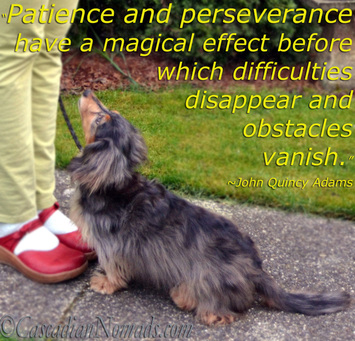
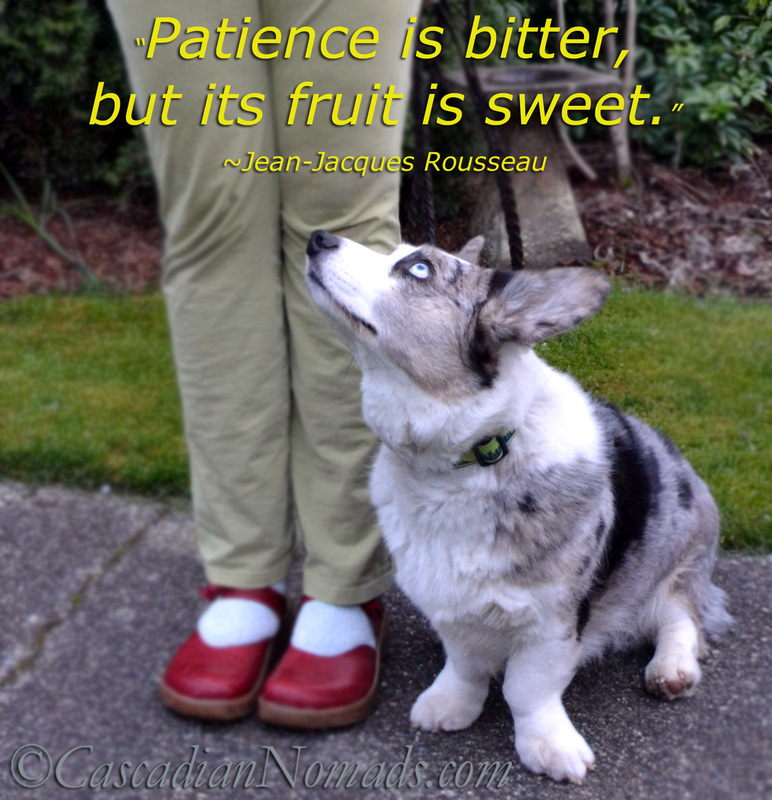
Patience Is More Than A Virtue, It's An Essential | Positive Reinforcement Pet Training Week Quote and a skilled at being patient dachshund
Typist: Bethany
Patience equals consistency in it's absolute importance to effectively train pets using positive reinforcement methods. Both are also incredibly difficult traits for trainers to master. While trainers frequently confess that issues their pets have are from the trainers lack of consistency, very rarely do people pinpoint a pet training or behavior problem that is caused by the trainers lack of patience. In my experience, problems ranging from the ever too frequently uttered "my dog is just not that smart" to an extreme issue like leash reactivity all can be solved by a patient and understanding trainer. Lack of patience in training is also what causes people to resort to use negative reinforcement methods. I know. I am likely one of the least patient people in the world. I have seen many a quick fix training method and am not proud of the fact that my dogs will suffer a lifetime of the negative effects of such training. Everyday I do my best to make it up to them the best way I know how. That way is to be as knowledgeable as possible about now using only positive reinforcement training methods with them and to never, ever lose my patience with them. I do my best but, of course, I am not perfect. Yet in my positive reinforcement pet training journey, I have found that the more patient I am with my pets, the more accepting they are of my fallibleness as well. We make mistakes and share triumphs together, as a team, which is what training with any pet, a dog, cat, bird or other, should always be about.

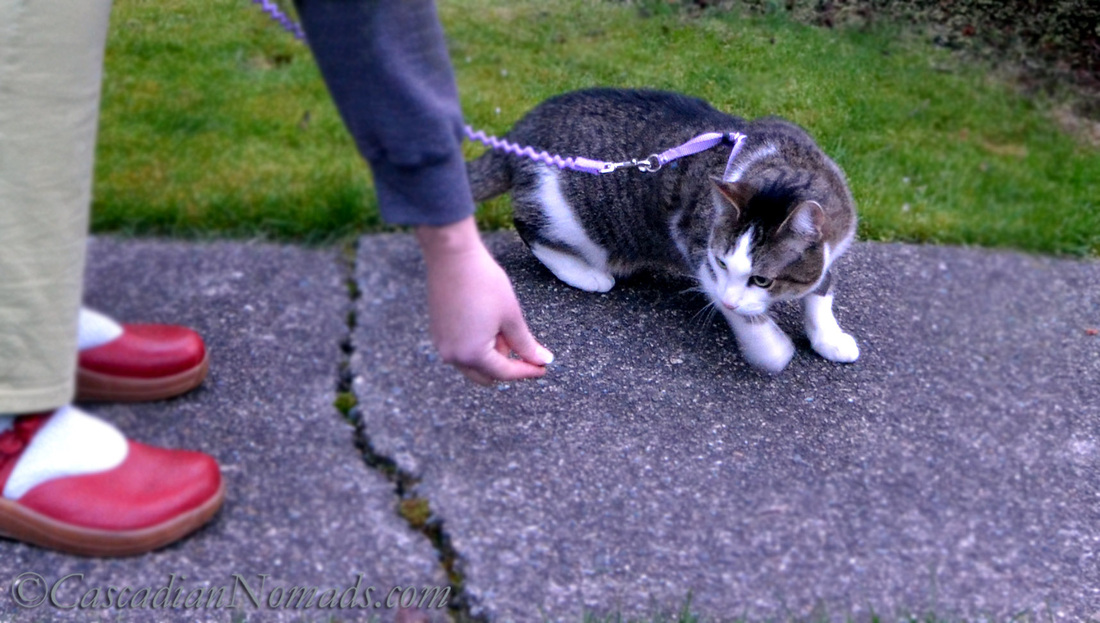
Positive Reinforcement Cat Training: Amelia works on a recall in a higher distraction enviroment
A real test of positive reinforcement trainer patience and working in baby steps: training a cat! Pictured is Amelia practicing a recall in a higher distraction environment.
The Trainers Patience Threshold
The pets and I don't train every day. While I know that this is not the best training technique the reason is that there are certain days that I just don't have the patience to be a good training partner to my pets. There are a lot of techniques to gain emotional balance for patient positive reinforcement training sessions but sometimes even those calming methods aren't going to cut it. The training community always drives home the truth that each and every training session should be a positive experience for the dog, cat, parrot or other pet but the same must be acknowledged for the trainer. "Don't worry, be happy" is an often used training motto here, even if it means a day or two off from training sessions.
The Trainees Patience Threshold
Any one who has ever taken a dog training class, watched a positive reinforcement pet training video or read anything about animal training knows that pets learn in baby steps. However, the trainers idea of what a baby step is may be vastly different that what the pet thinks slow learning should look like. Basically, there are no stupid animals, just impatient trainers. We all know whenever anything goes wrong in training it is the trainers problem and not the pets fault. Yet this is a very difficult theory to put into practice. Acceptance that it's okay for a pet to simply not want to learn something is challenging.  An example of this would be that if a human is allergic to lilacs, should that human be expected to have an intimate knowledge of how to grow lilacs? Just like if a dog loves to jump, will it automatically excel at agility? Now the human allergic to lilacs could be a master gardener but just not have experience in growing lilacs. Similarly, the leaping dog could be too fearful for a loud, large agility ring but may love Rally or obedience with jumps. Paying attention to what the dog is willing to learn, the patience and focus each pet has for certain skills, goes a long way in improving the trainee and trainer patience.
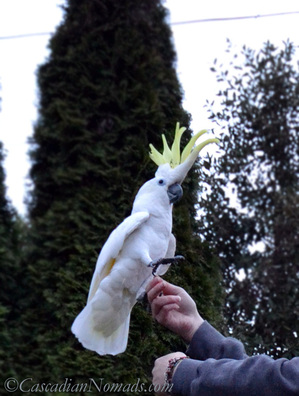
Patience Is More Than A Virtue, It's An Essential | Positive Reinforcement Pet Training Week: Some tricks take a long time to learn, like cockatoo Leo and
Leo practices his "wave" which we have been working on for what feels like forever...
Patiently Track Training Progress
In January, I mentioned my need for a pet training journal. Gaining patience in training is one of the many reasons a training journal has been recommended by so many amazing teachers I have worked with over the years. If a trainer can see incremental progress, even in teeny-tiny baby steps, then it is much easier not to fall into an impatient "we never get anywhere" trap. Also laid out in a training journal are methods, tricks, etc that just don't work or that the trainee just doesn't like. Life with a reactive corgi is what has best taught me that it is the little things, like the one non-reaction on an otherwise mad-dog-on-a-leash walk, that make a difference in each moment of training. In fact, isn't it the teeny tiny positive things that make a difference in each moment of life? All of the ups and downs in training time with the pets can be put into black and white in a journal and both trainer and trainee might learn they are more patient than they thought.
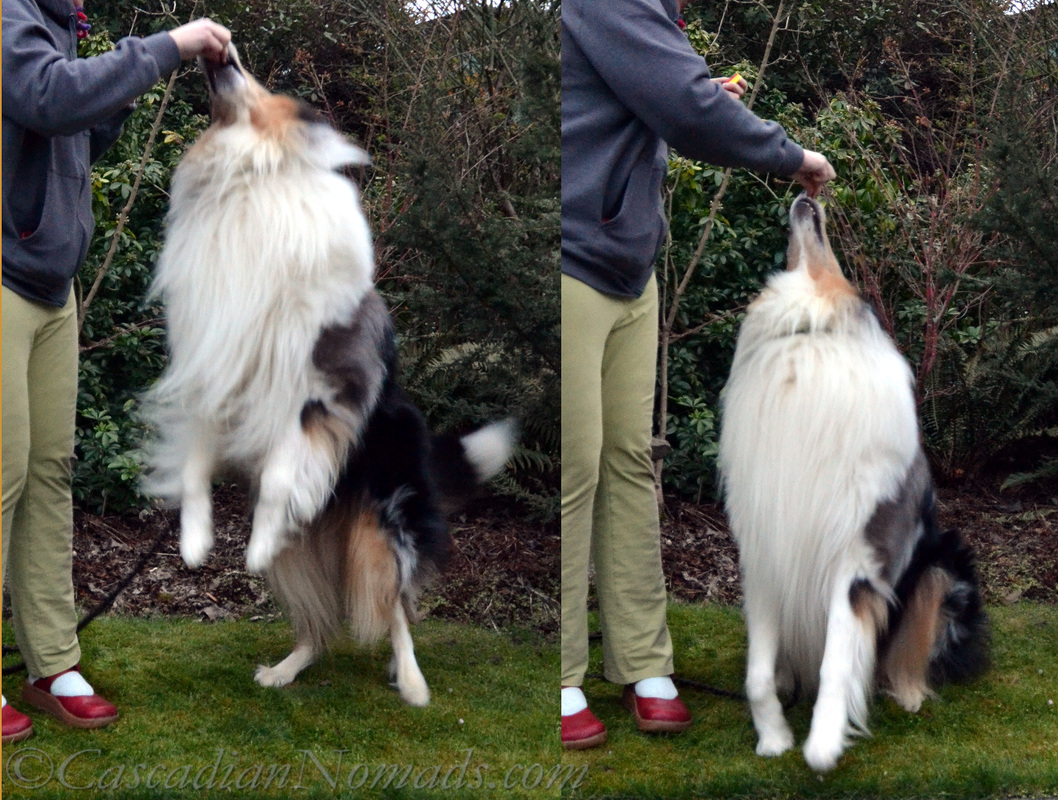
Patience Is More Than A Virtue, It's An Essential | Positive Reinforcement Pet Training Week: When a trainer is impatient, training goes wrong. Collie Huxley has never responded to being lured into a
The trainers impatience in luring Huxley into a "sit pretty" has not worked for the three years we have been trying to learn it. Huxley prefers to jump (left) so perhaps patiently clicking and treating even the teeniest paw lift (right) will finally help us nail down this trick. Stay tuned!
Practice Patience Games
Mastering patience in training takes, well, patience. I have attended several positive reinforcement training workshops that focused only on training games to help improve trainer patience. One workshop was about shutting up. That's right. The trainer had to just be quiet and let the dog work. And, wow, was it ever tough. It was probably one of the most laughter filled classes I have ever been in because none of the attendees could keep their mouths closed even for a few minutes. Yet in the end, when we shut up and truly focused on training the dogs, they learned incredibly fast and were very proud of themselves. It is this kind of respectful teamwork in training that is the goal of any patience building game.
A favorite training game to get out of training ruts, gain respect for a pets intelligence and master trainer patience skills is "Teach Your Dogs Something New In Ten Minutes." This game forces baby steps, focus and patience. During the ten minute or less training game, the trainer must be quiet and focused since, even though trainers are always very eager to teach the cue word or signal, a dog, cat or other pet will not learn a cue in ten minutes. The best way to use this game is to aim to train a very small step towards a skill. Patience and improved positivity for both trainer and trainee comes from understanding that the small step in itself is teaching your pet something new.
I wish I could conclude this article by saying that will all of these steps, a trainer will never again lose patience with their pet. Despite being the least patient person in the world, I long for my pets to always see me as stoical and encouraging. But I am indeed only human. I will make mistakes, including being impatient and grouchy. The positive reinforcement training journey that my pets and I are on together will have it's ups and downs, No matter what turbulence we endure, I am committed to mentally stimulating my pets the kindest way I know how. My know how is always expanding and improving and I truly appreciate Wilhelm, Brychwyn, Huxley, Amelia and Leo's patience with me as I work on positively training myself too. Patience goes a long ways for all of us, humans and animals, in every aspect of our lives. I love that we will all continue to work on being patient together.
Patience Is More Than A Virtue, It's An Essential | Positive Reinforcement Pet Training Week Quote and a leash reactive corgi who test a trainers patience but it worth it!
The Teach-Your-Pet-Something-New-In-Ten-Minutes Challenge:
Putting positive reinforcement pet trainers patience to the test
We challenge you to try the Teach-Your-Pet-Something-New-In-Ten-Minutes game and report the results during next months Positive Reinforcement Pet Training Week. Maybe you will try the game once and learn that you must move more slowly with your pet. Maybe you will discover that your pet learns more quickly than you thought when you are patient and focused. Maybe you will play the game everyday for a month and your pet will baby step it's way into an awesome new trick. Maybe you and your pet will simply learn to stay positive and patient.
Share this post:

Tweet


Read More
12 Comments
<<Previous
Forward>>

    Cascadian Nomads
    Pet Adventurers

    Cascadian Nomads adventurous dogs and parrot with pet and travel blogger, Bethany Clochard.
    Cascadian Nomads canines and psittacine on a road trip with blogger Bethany Clochard.
    Pet travel blogger Bethany Clochard shares a lifetime of budget travel experience, camping, and enjoying outdoors & Pacific NW adventures with pets. She currently hits the road with three dogs, a cockatoo & a cat.
    Related
    Instagram Follow on Instagram

    Picture


    Follow on Bloglovin
    follow us in feedly
    Picture

    Never miss a post! Have Cascadian Nomads Pet Adventure Blog delivered to your inbox:

    Delivered by FeedBurner


      Get our e-mail newsletter:

    Sign-Up

    Find anything on our site by searching here:
    Click any sidebar image to learn more!

    Cascadian Nomads only places ads for products we use, made by businesses we like. We highly recommend a click to
    visit our sponsors:
    (not affiliate links)
    WrapSit Quad Folding Chair Slipcover
    WrapSit is the ONLY slipcover crate for your folding quad chair. It makes taking pets and personal items outside or on a trip exponentially easier!


    Join us on the First Monday of Every Month!
    Positive Pet Training Week

    Positive Reinforcement Pet Training Week
    Hosted by Cascadian Nomads, Tenacious Little Terrier,
    Travels with Barley, and
    Wag n' Woof Pets.

    Picture
    Celebrate #MultiPetDay June 30th

    Categories

    All
    Adventures
    Amelia
    A To Z Challenge
    Awards
    Birds
    Black & White Photography
    Blog The Change For Animals
    Brychwyn
    Budget Travel
    Camping
    Cascadia
    Cats
    Celebrations
    Cockatoo
    Collie
    Corgi
    Cross Country Drive 2013
    Dachshund
    Dogs
    England & Wales 2014
    Fit Dog Friday
    Giveaway
    Holidays
    Humans Who Love Pets
    Huxley
    Leash-law
    Leo
    Multi Pet Life
    Peeks At The Past
    Pet Fitness
    Pet Health
    Pet Training
    Pet Travel
    Photography
    Planning Pet Adventures
    Positive Pet Training Week
    Product Review
    Road Trip
    Scoop That Poop
    Seattle
    Silliness
    Southwest-drive-2014
    Sponsored Post
    Urban Hikes
    Walk Your Dog Week
    What To Pack
    Wilhelm
    Woof-support
    Wordless Wednesday


    The Cascadian Nomads are:
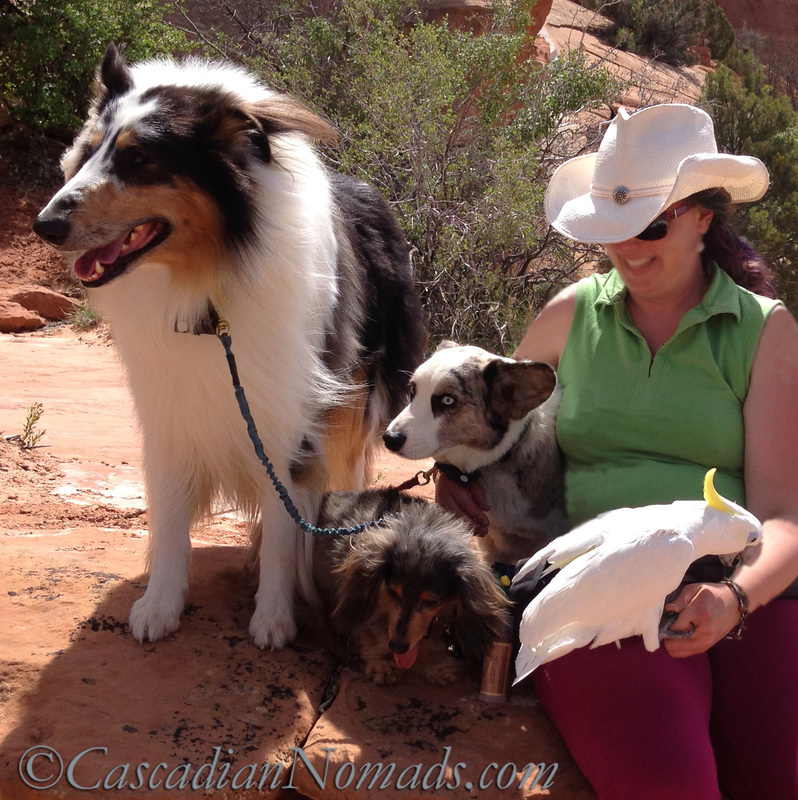
    Cascadian Nomads Bethany with the dogs and Leo at Wilson's Arch, Moab, Utah
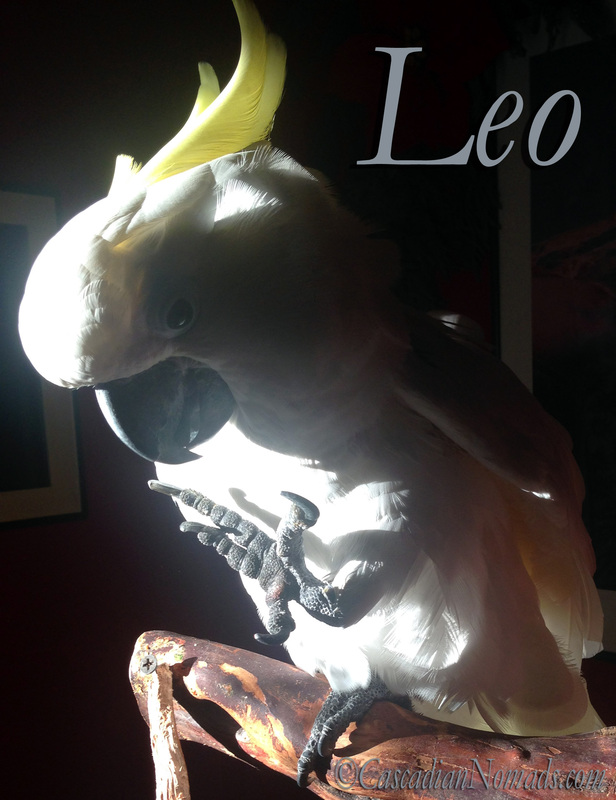
    Cascadian Nomads triton cockatoo Leo enjoys the sunshine in West Seattle, Washington, Cascadia
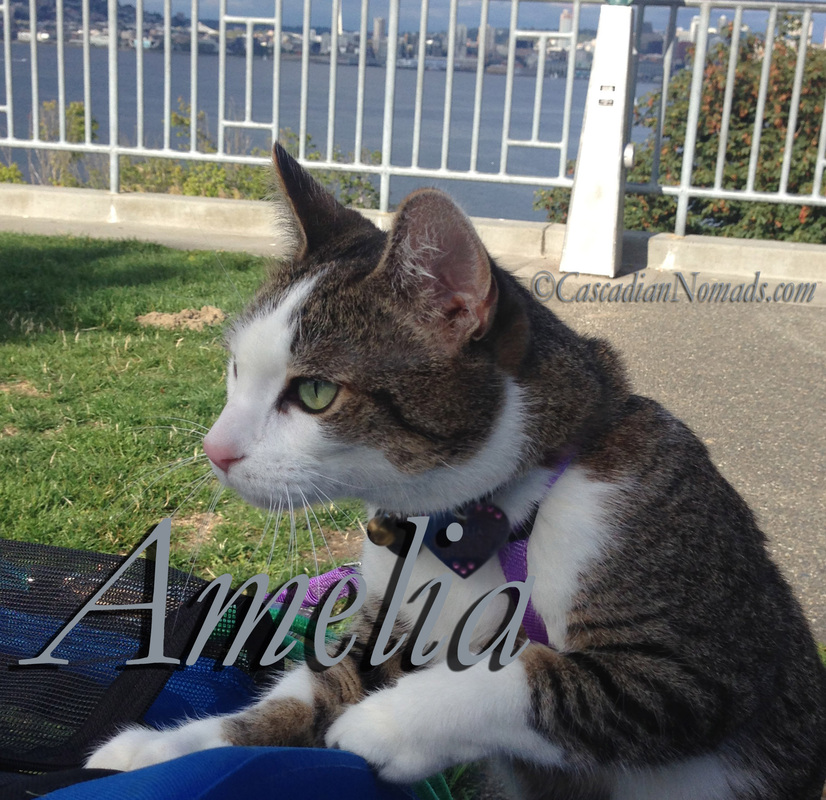
    Cascadian Nomads adventurous cat Amelia enjoying the view in West Seattle, Washington, Cascadia
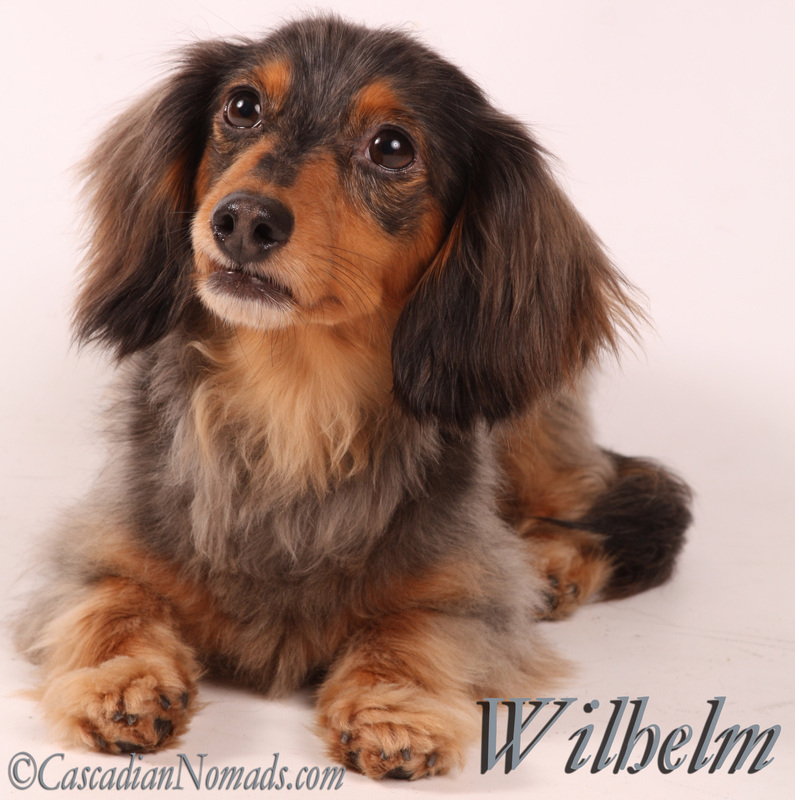
    Cascadian Nomads black and tan dapple miniature dachshund
    Cascadian Nomads cardigan welsh corgi Brychwyn, Alpental, Washington, Cascadia
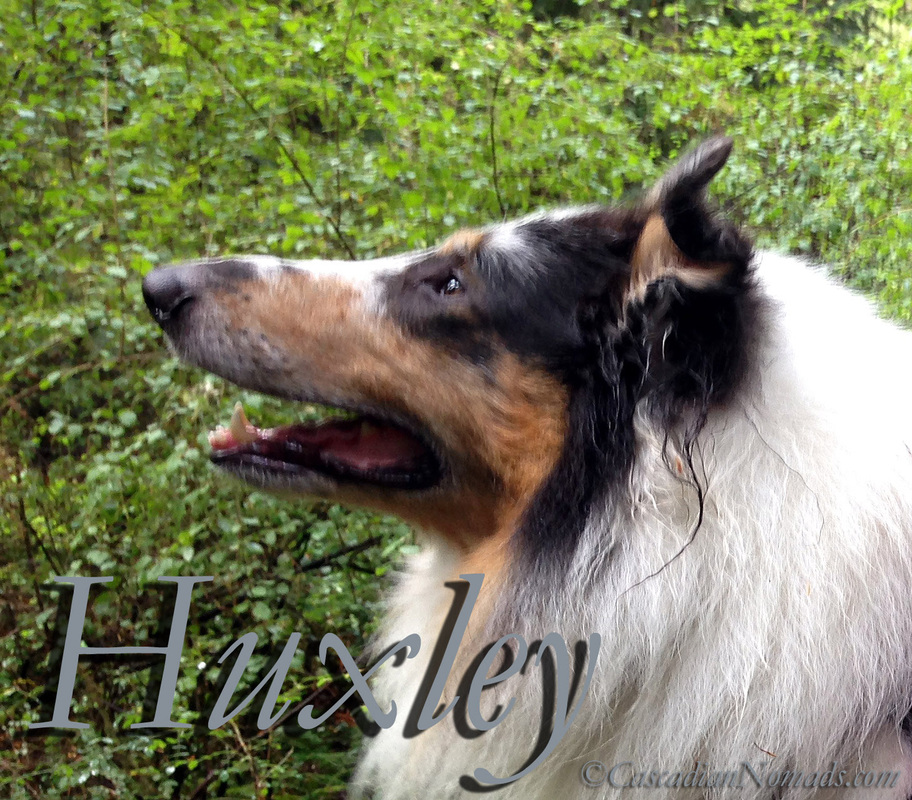
    Cascadian Nomads rough collie Huxley enjoying the green at Lopez Hill Park, Lopes Island, Washington, Cascadia
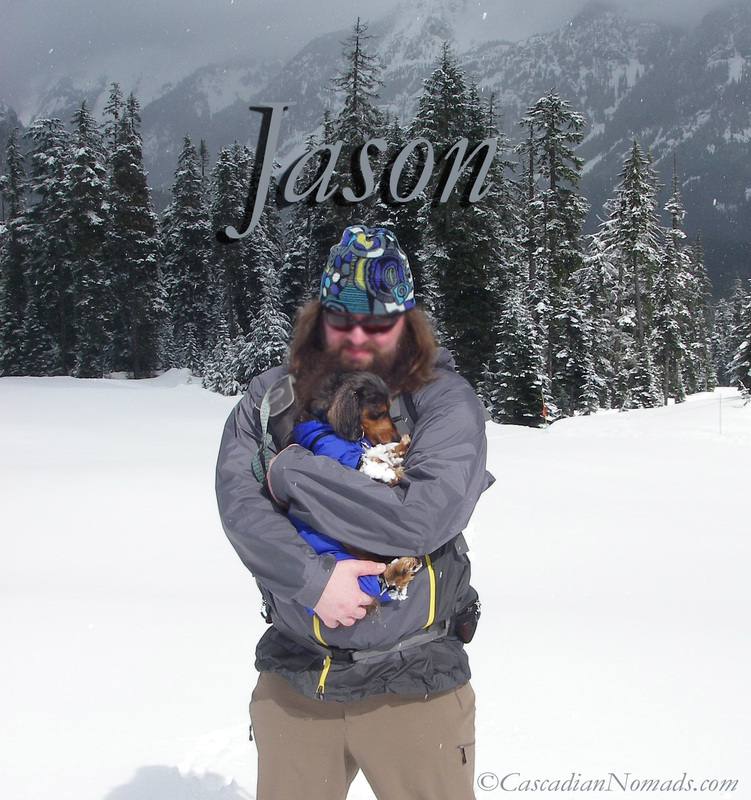
    Cascadian Nomads Jason with miniature dachshund Wilhelm snowshoeing Silver Fir Snoqualmie Pass, Washington, Cascadia
    Cascadian Nomads founding pets:
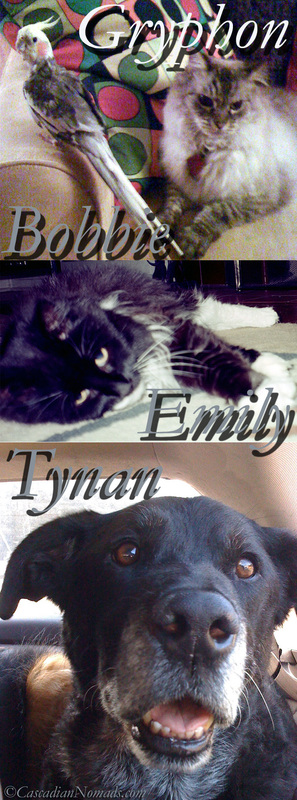
    Cascadian Nomads Founding Pets: Cockatiel Bobbie Birdie, cats Emily and Gryphon and dog Tynan.

    Features & Awards

    See products on this blog you like? Find all of our favorites on our Amazon Influencer page!
    Picture

    Bethany Clochard (@cascadiannomads) - influencer profile on Dealspotr
    dealspotr.com

    © Copyrighted Content
    Posts, words, photos or images from or featured on this blog may not be copied, reused or reproduced in any form without the prior express permission from the blog owner.

    The Doug

    The Fine Print
    For more on Cascadian Nomads privacy policy, advertising disclosure and responsibilities to our readers and visitors, click here.

Disclaimer
Cascadian Nomads are not veterinarians, behaviorists or animal trainers. Always consult with a veterinarian before starting or changing your pets exercise routine, before traveling with your pet, before changing your pets diet or before using any new pet products. Since all pets are unique individuals, consulting with a veterinarian, behaviorist or animal trainer about your pets specific needs is always recommended.
Disclosure
Every post  Cascadian Nomads publishes that is sponsored by a company or brand or obtained through an affiliation with a media network will contain a disclosure paragraph.  We do not use any affiliate links,  just regular links to a product or company website.  Cascadian Nomads only shares honest information that we feel is relevant to our readers whether a post is sponsored or not.
Privacy Policy
Cascadian Nomads does not share personal information with third-parties nor do we store information we collect about your visit to this blog for use other than to analyze content performance for marketing purposes. We do use cookies and add-ons, which you can turn off at anytime by modifying your Internet browser's settings or opt out of  add-ons. We are not responsible for the republishing of the content found on this blog on other Web sites or media without our permission. This privacy policy is subject to change without notice.
Copyrighted Content
Posts, words, photos or images from or featured on this blog may not be copied, reused or reproduced in any form without the prior express permission from the blog owner.

©2013-25
BethanyGO Designs


Cascadian Nomads Pet Adventure Blog: Budget pet adventure inspiration through stunning photography and amusing dog, cat, cockatoo and human stories.